
Dearborn Warrant Checks
Few cities in Wayne County put a warrant-clearing page right next to their court contact details, but Dearborn does. Use that published route rather than guessing. Keep your case or ticket number in hand when you call. The court mails notice within 14 days of issuance, but mail goes missing and a lost letter changes nothing about the order itself. A call to the 19th is still the safer step.
- Read the citation or notice for the case number and the court date that was missed.
- Check the 19th District Court's public case search and docket links for the case history.
- Call the court at (313) 943-2060 and ask whether the case shows an active warrant.
- Ask which clearing route the court allows: payment, bond, a walk-in, or a plea by mail.
- Contact the Dearborn Police Department only for police records, since it cannot recall a court warrant.
Policing and Courts in Dearborn
The 19th District Court sits at 16077 Michigan Avenue and keeps weekday hours from 8 a.m. to 4 p.m. Its docket reaches well past traffic. Dearborn parking and traffic matters, city ordinances, misdemeanors carrying up to a year and a $1,000 fine, felony arraignments with bail and preliminary examinations, and civil claims under $25,000 all land here. The court page carries the address, the weekday hours, and links for cases and payments.
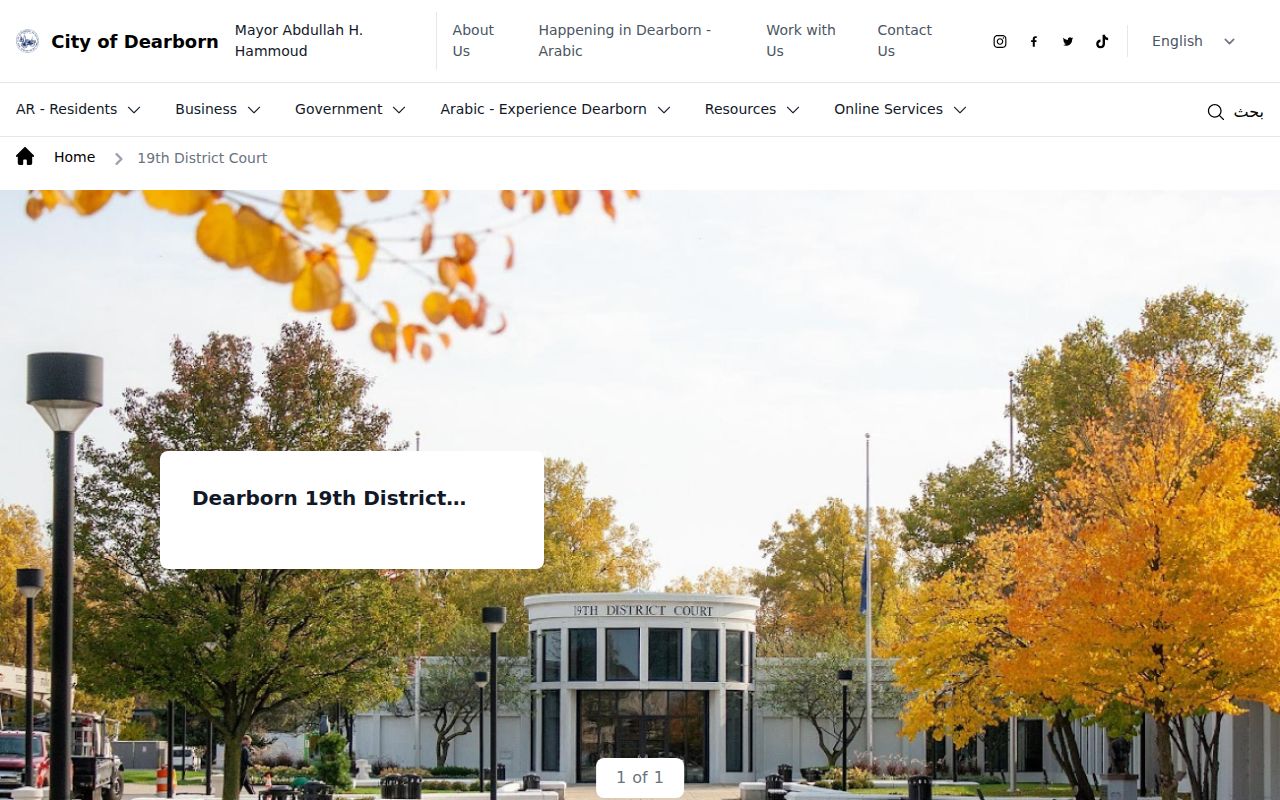
19th District Court
16077 Michigan Avenue, Dearborn, MI 48126
(313) 943-2060
Dearborn Police Department
16099 Michigan Avenue, Dearborn, MI 48126
Records and FOIA requests through the Administrative Division
The 19th District Court's Dearborn Warrant Triggers
Dearborn spells out what can produce a warrant, and the list is more specific than most. A failure to appear at a show-cause hearing counts. So does a failure to pay fines and costs, or to follow sentencing, probation, or work-program conditions. Not scheduling an arraignment makes the list too, along with a probable-cause arrest-warrant request. The Dearborn warrant page walks through each trigger and the clearing options that follow.
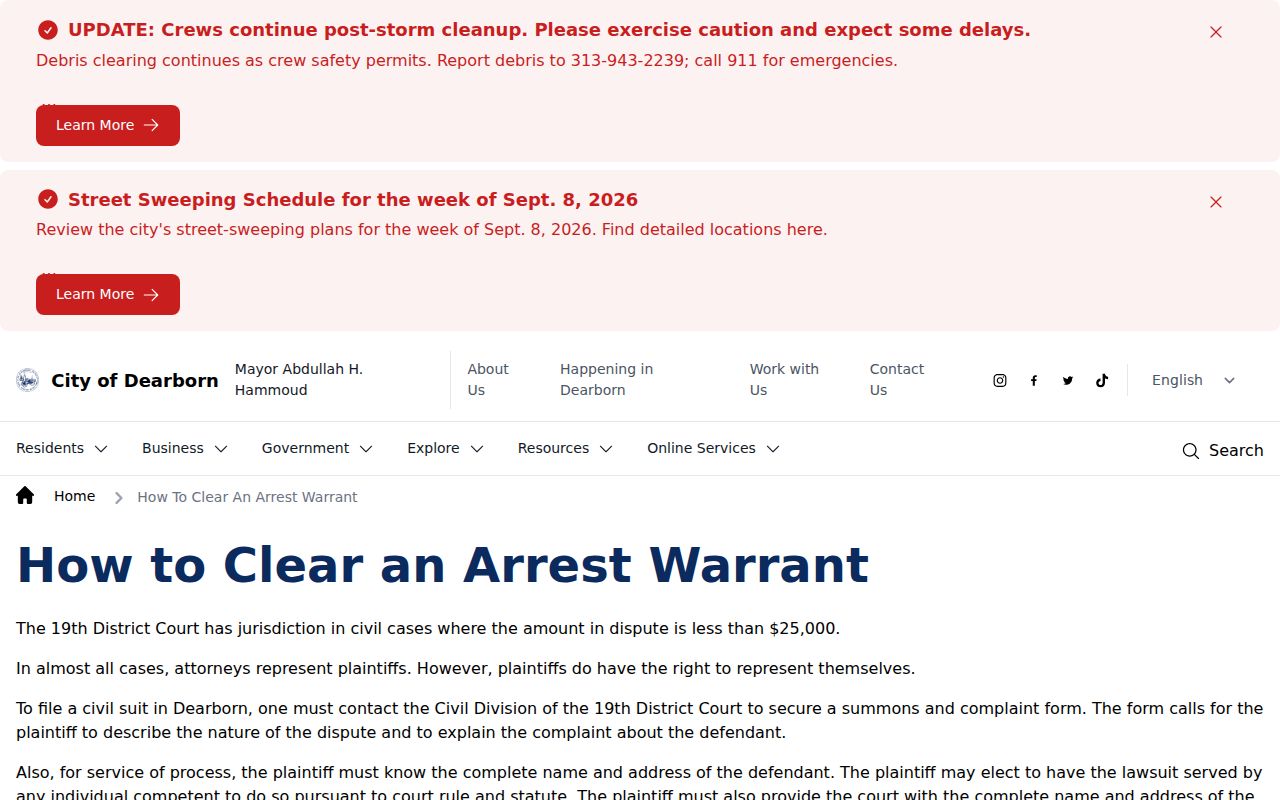
The same court handles felony arraignments, so a Dearborn warrant might be a simple payable matter or a serious criminal case. The difference shapes everything that follows. Ask the clerk which type of file you have before picking a payment route.
Warrants in Dearborn: The Main Types
Every Dearborn warrant type brings its own court response. What happens next hinges on whether the case is payable or criminal. Payable traffic matters can sometimes be settled with money alone. A criminal matter may take a bond or a date before a judge.
| Warrant Type | How It Arises | Typical Response |
|---|---|---|
| Traffic or parking warrant | Unanswered citation or unpaid judgment | Payment, or a bond for a judge date |
| Show-cause warrant | Missed a show-cause hearing | Court appearance, with a fee added |
| Nonpayment warrant | Unpaid fines and costs | Payment, or a payment arrangement |
| Probation or work-program warrant | Failed to follow a sentencing condition | Judge appearance, often with counsel |
| Arrest warrant | Probable cause on a new charge | Attorney contact, arraignment, bond |
Dearborn's 14-Day Warrant Rule and Mailed Notice
Dearborn's traffic process gives you 14 days from a citation to contact the court. Pay inside that window for a qualifying moving violation and the state's online ticket system can handle it. After 14 days, the court may add a $30 late fee. A misdemeanor matter can also move toward a warrant. The traffic page ties each fee to a day count and a license consequence, so read it before the clock runs out.
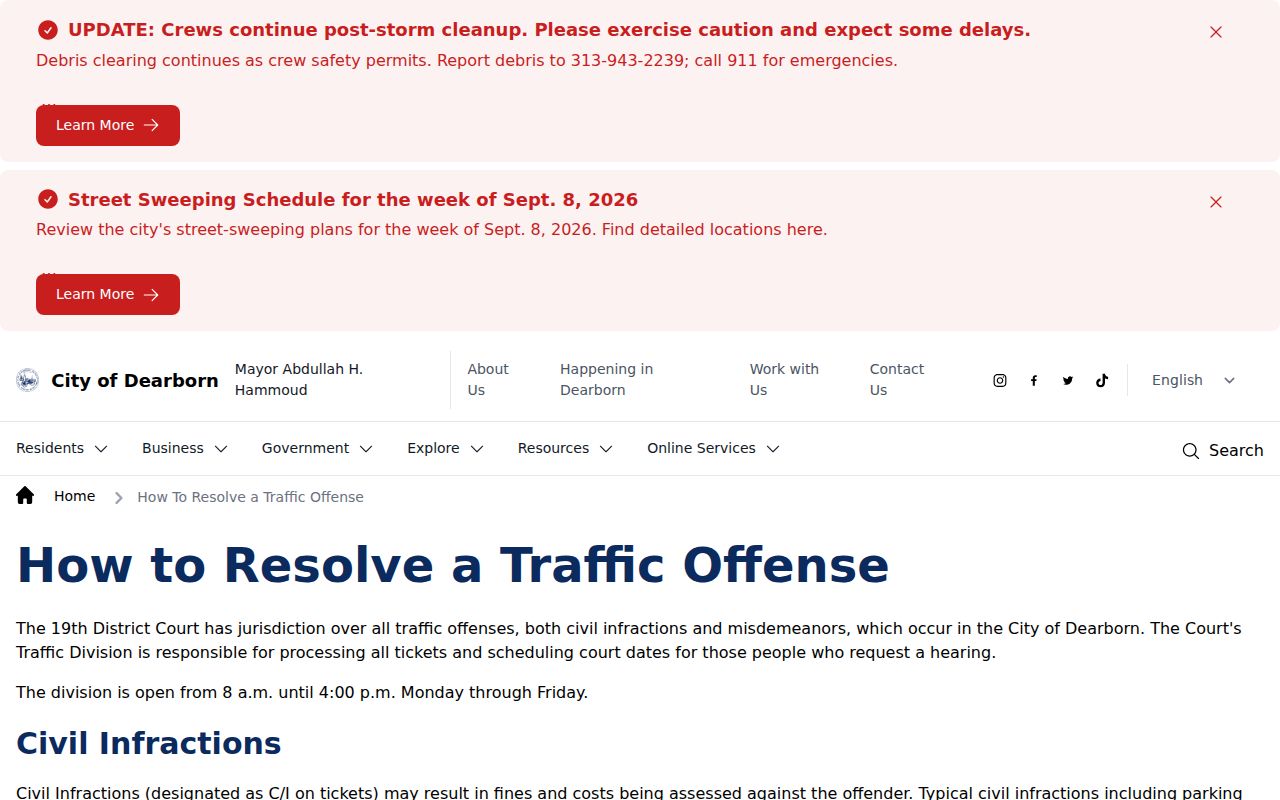
The court also mails written notice within 14 days of issuing a warrant to the address on file. Treat the letter as a courtesy and nothing more. A letter that never arrives does not cancel the warrant or soften its terms.
Pay, Bond, or Ask About Plea by Mail
Dearborn publishes four clearing paths, and the right one depends entirely on the case. A payable offense can be paid at the court, which closes the matter. A nonpayable or criminal case usually needs a bond posted for a future judge date. Someone already in custody can ask the warrant division about a plea by mail. The city also points to a walk-in warrant route through Court Innovations at 8 a.m. That program is specific to Dearborn, and its hours and eligibility can shift, so confirm before you travel. One call to the clerk settles which of the four paths fits your file, and that answer saves a wasted trip.
Dearborn's Published Warrant Fee Timeline
Dearborn publishes a staged set of amounts that most courts leave vague, and every one belongs to the 19th District Court. The math starts at 14 days. A $30 late fee applies then. A clearance or reinstatement cost can follow at 46 days if a license was suspended for nonpayment, and a 20% late penalty can kick in at 56 days. Miss a show-cause hearing and the tally grows again, with a $50 show-cause fee plus a $50 warrant fee. Ask for an itemized total, because the original fine, the court costs, and each of these charges sit on separate lines.
Dearborn Warrant Records: What They Show
A Dearborn warrant record identifies the case and the issuing court, and it separates money from status. That split trips up most readers. Ask for the itemized total, since the original ticket, the late charge, and the warrant fee appear as separate lines.
| Case or citation number | The court identifier, in a format such as 19-0045678-TR. |
|---|---|
| Case type | Traffic, parking, ordinance, misdemeanor, or felony. |
| Issuing court | The 19th District Court, including the division handling the matter. |
| Amounts | Original fine, costs, late fee, penalty, show-cause fee, and warrant fee. |
| Status and next date | Warrant, recalled, closed, or a scheduled appearance with bond. |
Dearborn Warrant Payment Options
Dearborn takes payment by CLEMIS online within the first 14 days for qualifying moving violations. Other amounts run through the court's online payment system, by mail with a check or money order to the 19th District Court, at the counter with a check, money order, Visa, MasterCard, or debit card, or through the 24-hour drop box beside the courthouse entrance. The drop box is a convenience and nothing more. It handles documents and payments. It is not a warrant interview, a bond posting, or a recall. If you need a judge to act, use one of the court's appearance routes instead.
Dearborn Police Records and the Court's Separate Role
The Dearborn Police Department collects reports and keeps its own administrative records, and it takes FOIA requests through its Administrative Division. A records request there can produce a police report or an agency record, but it cannot produce a court status. The police department page lists its divisions, records contacts, and the main city number.
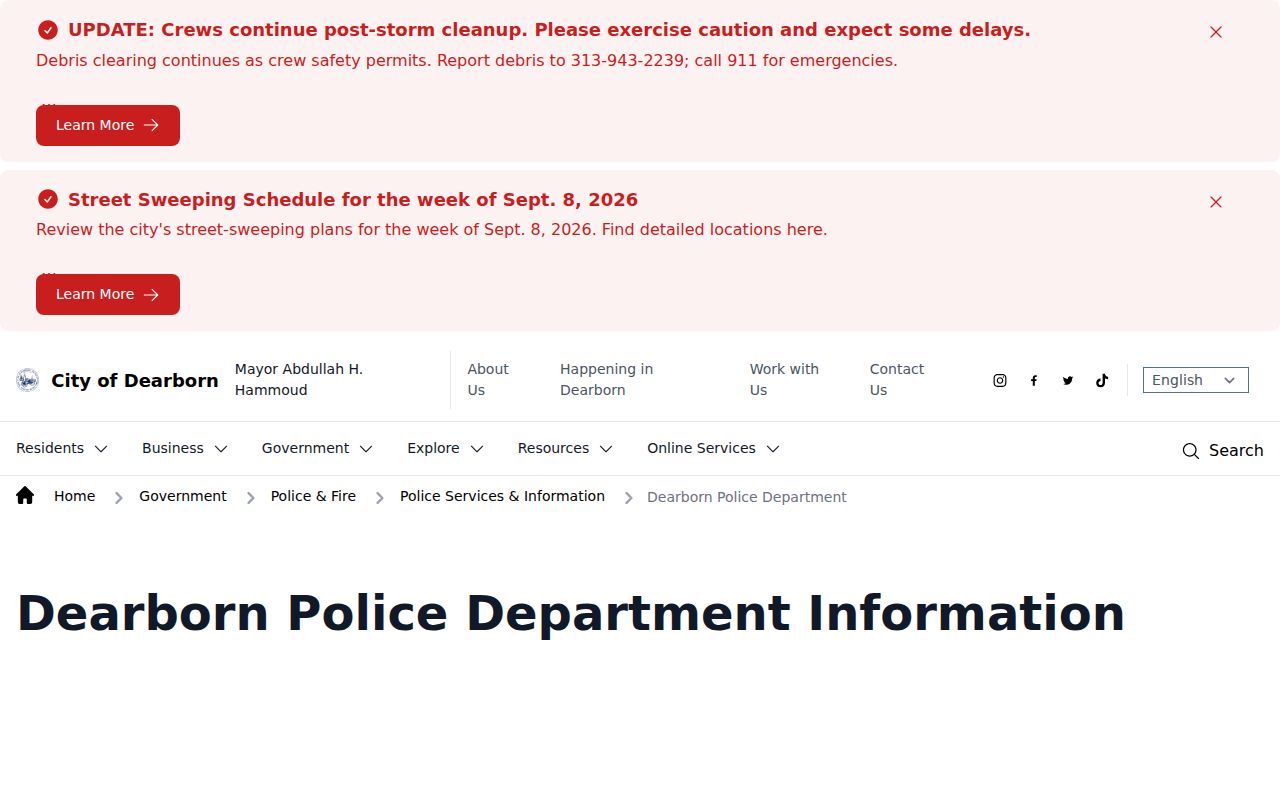
Two counters, two jobs. In Dearborn, the court is the office that confirms a warrant, sets bond, and sets the next hearing date, while the police department speaks only for its own files.
Dearborn Warrants and Wayne County
Dearborn sits inside Wayne County, which spreads its warrant records across more than twenty district courts, the Third Circuit Court, and the Sheriff. No countywide list exists to check. A Dearborn warrant therefore stays with the 19th District Court. Once an arrest happens, custody and bond move to the Sheriff and the county jail.
Warrant flow: Dearborn police and the 19th District Court › Third Circuit Court on a felony › Sheriff custody and bond after an arrest.
For the county picture, start with the Wayne County warrant records home page.
Accessing Dearborn Warrant Records
Two rules govern access in Dearborn. Court records follow court rules; city agency records follow the Michigan Freedom of Information Act. Sealed cases, juvenile matters, and protected identifiers stay out of public view either way.
Key Rules:
Michigan Freedom of Information Act, 1976 PA 442 covers city and county agency records, with exemptions and fees.
MCL 15.243 allows a law-enforcement record to be withheld or redacted.
MCL 712A.18 limits access to juvenile records, which route through the Family Division.
Ask the Dearborn clerk what the court can confirm to you or your attorney. A record you cannot see is not the same as one that does not exist.