
How Arrest Warrants Work in Wayne County
An arrest warrant is a signed court order. It lets a peace officer take a named person into custody on a charged offense. The order rests on probable cause: facts that would lead a reasonable person to believe an offense occurred and that the accused took part. Michigan law sets out the complaint and reasonable-cause process that gets a case to that point. Wayne County adds a step before the judge ever sees the request. A police agency sends its reports, witness statements, and evidence to the Prosecutor's Warrants Section. Prosecutors there weigh the package for legal sufficiency, then authorize it, send it back for more work, or decline it outright. That review runs every day of the year. After-hours prosecutors in Wayne County field the urgent requests.
Note: Prosecutors authorize a request and review the evidence; a judge or magistrate issues the warrant after that review.
From a Police Report to a Wayne County Arrest Warrant
The charging call happens in an office, not a squad room. The Wayne County Prosecutor's Office staffs a Warrants Section to receive and review police requests, plus a Screening and District Courts Division covering roughly 25 district and municipal courts. Prosecutors also vet search-warrant requests before an agency files one. The Warrants Section page explains how a request gets authorized, returned, or denied.

One limit is worth knowing. A denial or a request for more investigation is not a public record you can search, and the prosecutor's file is not a status page. If a case moves ahead in Wayne County, the court file becomes the record where the warrant lives.
Arrest Warrants: What They Contain
The warrant itself is short. It names the accused when the name is known, spells out the offense, and commands an authorized officer to arrest the person and bring them before a judicial officer, along with the court's release direction. Everything heavier sits in the supporting file.
| Warrant or complaint number | The court's identifier, in a format such as 2026-001234-FC. |
|---|---|
| Offense and statute | The charge, its classification, and the count number. |
| Issuing judge or magistrate | The judicial officer who signed the process and the court that holds it. |
| Probable-cause basis | The complaint or affidavit summary. This is often withheld from public view. |
| Bond and conditions | Cash, 10%, surety, personal, or a no-bond hold, plus any next date. |
| Status | Active, served, recalled, canceled, or sealed. |
A public case index can show the case and the charge while hiding the warrant paper itself. Treat the two as one record and you will draw the wrong conclusion about what your Wayne County search actually turned up.
Who Issues a Wayne County Arrest Warrant
A district judge or magistrate does most local warrant and probable-cause work in Wayne County. Circuit-level felony matters start in district court first, and any case bound over moves on to the Third Circuit Criminal Division. The Wayne County Clerk keeps the Circuit records, while each district court clerk holds the local file. The Clerk criminal division page lists counter hours, payments, and motion fees.
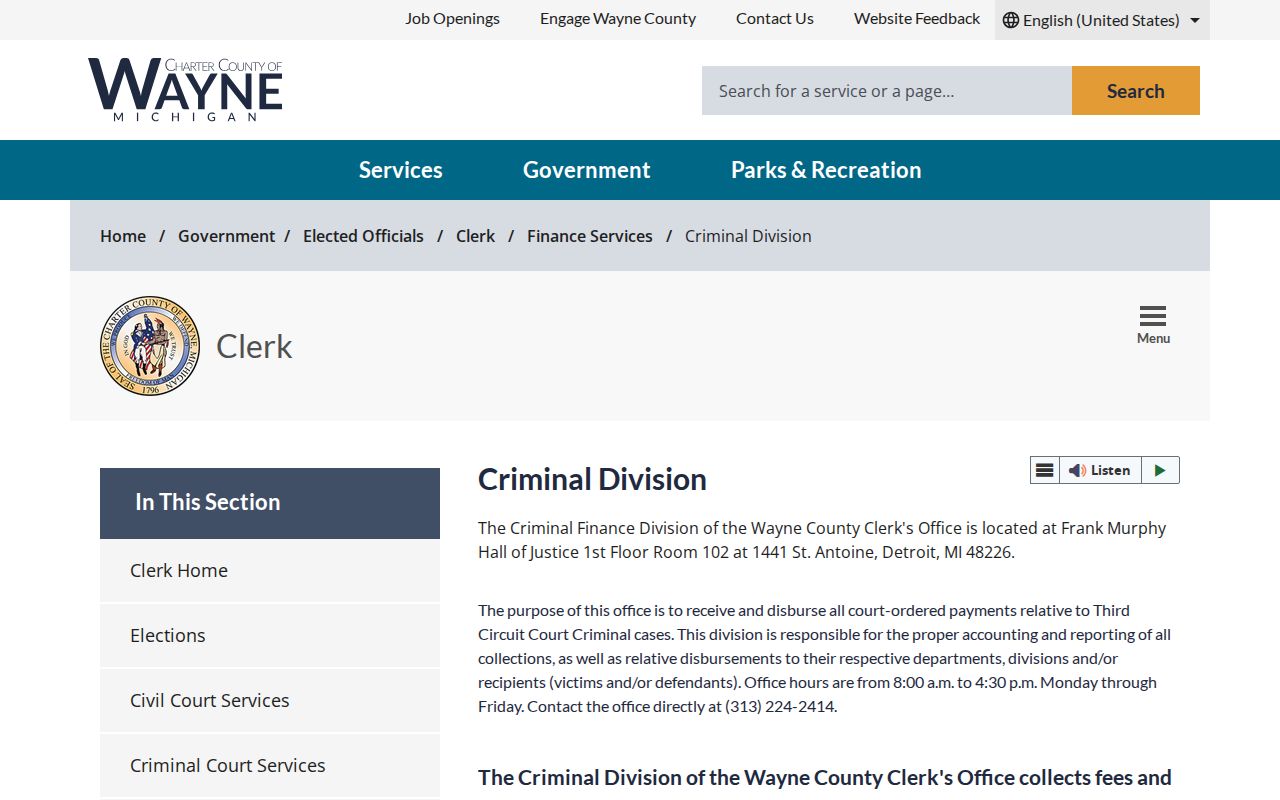
Keep the roles straight. The clerk stores records and takes payments, while the judge sets bond and decides recall. Neither the clerk nor the prosecutor in Wayne County can confirm a warrant the issuing court has sealed.
How Warrants Get Served in Wayne County
Serving a warrant is police work, not court work. The Wayne County Sheriff's Felony Warrants function tracks fugitives and serves Third Circuit arrest warrants, and it helps agencies outside the county. Local departments serve their own city's warrants. Detroit routes its warrant cards through a court liaison process before entry into the state network.
Wayne County Sheriff, Felony Warrants
5301 Russell Street, Detroit, MI 48211
(313) 833-0864
No agency can recall a Wayne County warrant to make an arrest problem disappear. Only the issuing court can end the order. That is why a walk-in visit or a motion goes to the court, never the police counter.
Arrest Warrants, Summonses, and Bench Warrants
Three court processes can bring a person before a judge, each with different obligations. A summons asks for an appearance and does not authorize arrest on its own. An arrest warrant does. A bench warrant follows a failure to comply. Wayne County adds a fourth label: the capias, the arrest order used here after some missed district or Circuit settings, and it works much like a bench warrant.
| Point | Arrest Warrant | Summons | Bench Warrant |
|---|---|---|---|
| Basis | Probable cause on a charge | A charge, with a court date | Missed obligation |
| Arrest authority | Yes | No, appearance is requested | Yes |
| Typical response | Court or attorney contact, bond, arraignment | Appear on the date | Clerk contact, walk-in, payment, or bond |
| Who clears it | The issuing court | Appearance satisfies it | The issuing court |
The Wayne County Warrant Card and LEIN Process
Detroit's police manual spells out how a capias becomes enforceable. Court liaison staff forward the order. Command staff complete a warrant information card plus a hold or notification card. Those cards move through records and identification for entry into LEIN, the law-enforcement network. Once entered, an active warrant stays in LEIN until an arrest or a court recall. That detail matters after a case resolves. The Wayne County court can recall the warrant and the network record should be canceled, yet the two updates do not always land at the same moment. Ask when the cancellation will be transmitted.
Wayne County Arrest Warrants and Federal Warrants
A Wayne County case number cannot rule out a federal matter. Federal arrest warrants issue from a federal magistrate or district judge, and the Eastern District of Michigan hears those cases at the Theodore Levin Courthouse in Detroit. Federal dockets live in PACER, a paid system, and sealed entries never appear there. The federal court locations page posts courthouse hours, entrances, and the Marshals number.
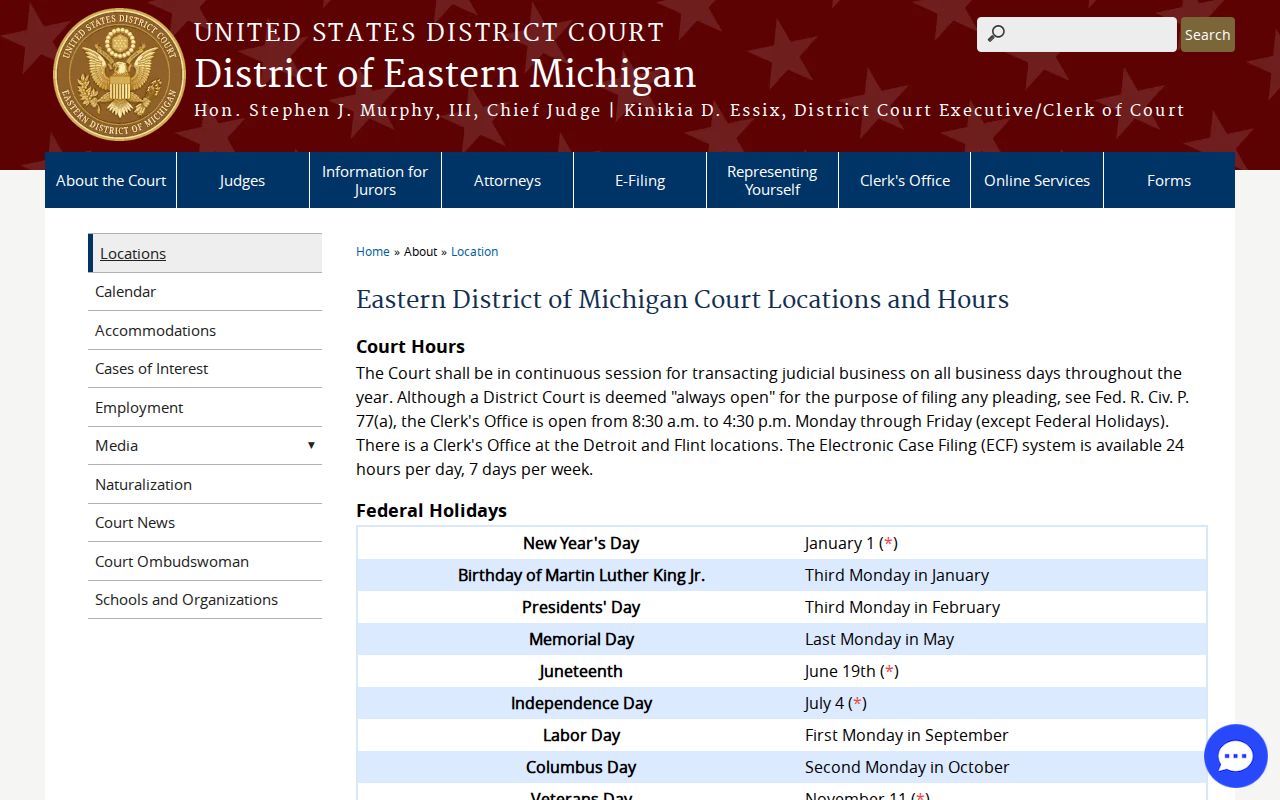
No public federal self-check list exists. The courthouse is not a walk-in warrant counter either. Anyone worried about a federal warrant, on top of a Wayne County matter, should speak with federal counsel before appearing anywhere. A state warrant, a federal detainer, and an immigration hold can all sit on one person at once.
Search Warrants Are a Different Document
A search warrant is a different animal. It lets police enter a described person, place, or thing and seize listed evidence. It is not a wanted notice, and it does not accuse anyone of an arrestable offense. In Wayne County, people sometimes spot a search-warrant reference and assume an arrest warrant sits behind it. Michigan law keeps the supporting affidavit mostly nonpublic, with only narrow exceptions. Ask the court which document you are dealing with before you act, because the two carry different access rules and different next steps.
Handling a Wayne County Arrest Warrant in Your Name
Do not sit on a Wayne County warrant and wait for a traffic stop. Dearborn warns that any officer may arrest on a warrant even when the contact starts for an unrelated reason. That turns a routine stop into custody on the officer's clock, not yours.
If a warrant names you: Contact an attorney, or call the issuing court and ask what the judge allows. Common paths are a voluntary appearance under Michigan Court Rule 6.105, a walk-in at the court's designated hour, a bond set for a future judge date, or a motion to recall filed by counsel. Ask what identification and payment instruments the court accepts.
Bond fixes custody and the immediate warrant condition, nothing more. The charge itself is untouched. Miss a court date and bond forfeiture can follow, moving the posted amount to the county. Once the court confirms a Wayne County warrant, the home page walks through how to clear a Wayne County warrant.