
How Municipal Court Warrants Work
A city warrant almost always starts small. An officer writes a traffic citation, a city department charges a misdemeanor, and the file lands in the district court covering that city. Miss a required step, and the judge or magistrate in that court issues the warrant. The work stays local. Wayne County prosecutors staff a division serving about 25 district and municipal courts, because most of these cases never travel further than the city that filed them. So the warrant stays put. It belongs to the city's own court. City police or a court officer serves it.
Note: A local court warrant does not move up to the county just because the county name is in the address.
The District Courts Behind Wayne County City Warrants
Plenty of people search for a Wayne County municipal court and come up empty. Michigan does not arrange its limited-jurisdiction courts that way in this county. The Wayne County court directory lists district courts, and city ordinance and traffic cases sit in whichever district court serves that city. The 36th District Court is the biggest, covering Detroit. The rest carry a number and a city. Think of the 16th in Livonia, the 19th in Dearborn, the 18th in Westland, and the 23rd in Taylor. Search by court number and city. The right file becomes far easier to reach.
City Court Warrants Across Wayne County
Every court below keeps its own warrant record. Each sets its own counter rules too. Treat the list as a starting map rather than a complete directory, and turn to the state court directory for the current contact of every other court in Wayne County.
| Court | City | Local Warrant Note |
|---|---|---|
| 36th District Court | Detroit | Public case inquiry plus a traffic and warrant inquiry form. |
| 16th District Court | Livonia | Case search omits warrant status; clerk or 9 a.m. walk-in. |
| 19th District Court | Dearborn | Publishes warrant triggers, notice timing, and fees. |
| 18th District Court | Westland | No public warrant portal located; call the court. |
| 23rd District Court | Taylor | Own-warrant checks happen in person only. |
Redford, Garden City, Inkster, Allen Park, Lincoln Park, Wyandotte, Southgate, Wayne, and Plymouth run their own district courts as well. Each holds the same local authority over Wayne County city cases.
Why a Wayne County City Warrant May Stay Local
Don't expect the Sheriff to help here. The Sheriff publishes no public county warrant list, and a city warrant would never appear on one anyway. Traffic, ordinance, and misdemeanor matters in the lower courts stay with the district court that issued them, and most of those files never touch the Sheriff at all. That kills the countywide search. A blank result on a county page means nothing. A city warrant is not a Sheriff jail record either. Custody runs on a separate system. Someone can carry an active city warrant in Wayne County without ever seeing the inside of a jail.
Wayne County Municipal Warrant Checks
A Wayne County city warrant check has the same shape everywhere, whatever the tools look like. Work the channels in order. Stop once the court confirms the status. Detroit runs a traffic and warrant request form, Livonia buries warrant status inside its case search, and Taylor wants an appearance in person.
- Identify the court from the citation, the notice, or the city where the incident happened.
- Search that court's public case index by name or case number and read the disclaimer.
- Call the court clerk if the index hides warrant status, which several local courts do.
- Use the local walk-in rule when the court publishes one, such as a morning docket in Livonia.
- Ask the police records counter only for agency-held records, since it cannot recall a court warrant.
Wayne County City Warrant Records: Clerk or Police
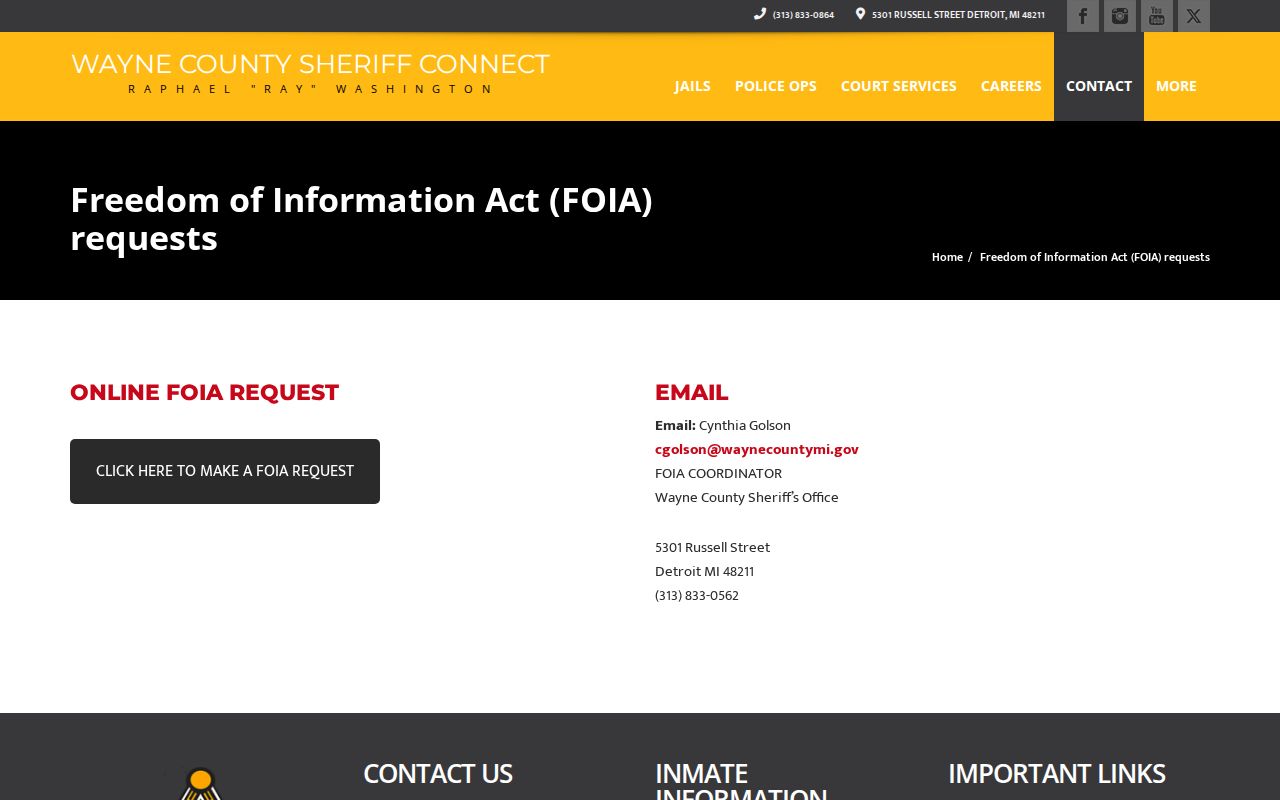
Two counters sit near each other in most Wayne County cities, yet they answer different questions. The court clerk handles warrant status, bond, and the next date. Police records are something else. That bureau deals with reports and agency files, not court matters. For agency records, the Sheriff FOIA page takes the request.
Only the issuing court can withdraw the order, so a police counter in Wayne County cannot recall a warrant. A records request never changes one either.
Municipal Warrants: What They Show
A municipal warrant record is a narrow thing. It ties a person to a case in one city's court. It also carries the amount and the appearance the judge set. Most public indexes stop right there. Only the issuing court can change the status, so a record pulled at a police counter in Wayne County cannot answer the recall question.
| Case number | The local court identifier, in a format such as 2026-004567-OM. |
|---|---|
| Issuing court | The district court and the judge or magistrate who signed the process. |
| Violation type | Ordinance, civil infraction, misdemeanor, or a felony preliminary matter. |
| Amount or bond | Fine and costs, or a bond set for a future appearance. |
| Status | Active, recalled, served, paid, or dismissed. |
Ordinance and Traffic Cases Behind Wayne County City Warrants
Case type drives everything here. Ordinance and civil infraction cases are usually payable. Misdemeanor and criminal cases in Wayne County bring an appearance and a possible arrest.
| Case Type | Usual Consequence | Who Handles It |
|---|---|---|
| Civil infraction | Default judgment, late fee, license consequence | The district court violations bureau |
| Ordinance violation | Fine and costs, or a show-cause date | The district court that covers the city |
| Payable misdemeanor | Payment or an appearance, then a warrant if ignored | The district court criminal division |
| Criminal misdemeanor | Arraignment, bond, and a court date | The district court judge or magistrate |
Ask the Wayne County clerk which type the file is before paying anything. The answer decides whether payment alone closes it.
Payment and Drop Boxes for Wayne County City Warrants
Every city court in Wayne County collects money its own way. Livonia takes cash, a check drawn on a Michigan bank or credit union, money orders, and cards, with a 3.5% card fee and a 24-hour drop box in the police lobby. Dearborn keeps a 24-hour drop box beside the courthouse entrance. Taylor accepts online, phone, drop box, and counter payments. Ask two questions first. Will this payment clear the warrant? Does the court still want you in person? A drop box cannot answer either one, and cash never belongs in a drop box at any Wayne County court.
Clearing a Municipal Court Warrant
Only the issuing court clears a city warrant. That holds in every Wayne County courtroom. The court allows a few paths: a payment on a payable matter, a walk-in appearance, a bond for a future judge date, or a motion filed by an attorney.
Ask the clerk: Is the warrant active, and what does the judge require to recall it? What identification and payment method does the court accept? When will the recall be entered, and what written confirmation is available?
A Wayne County recall ends the warrant, not the case. Fines, court costs, probation terms, and any license requirement still stand until each is settled on its own.
Wayne County City Warrant Records Requests
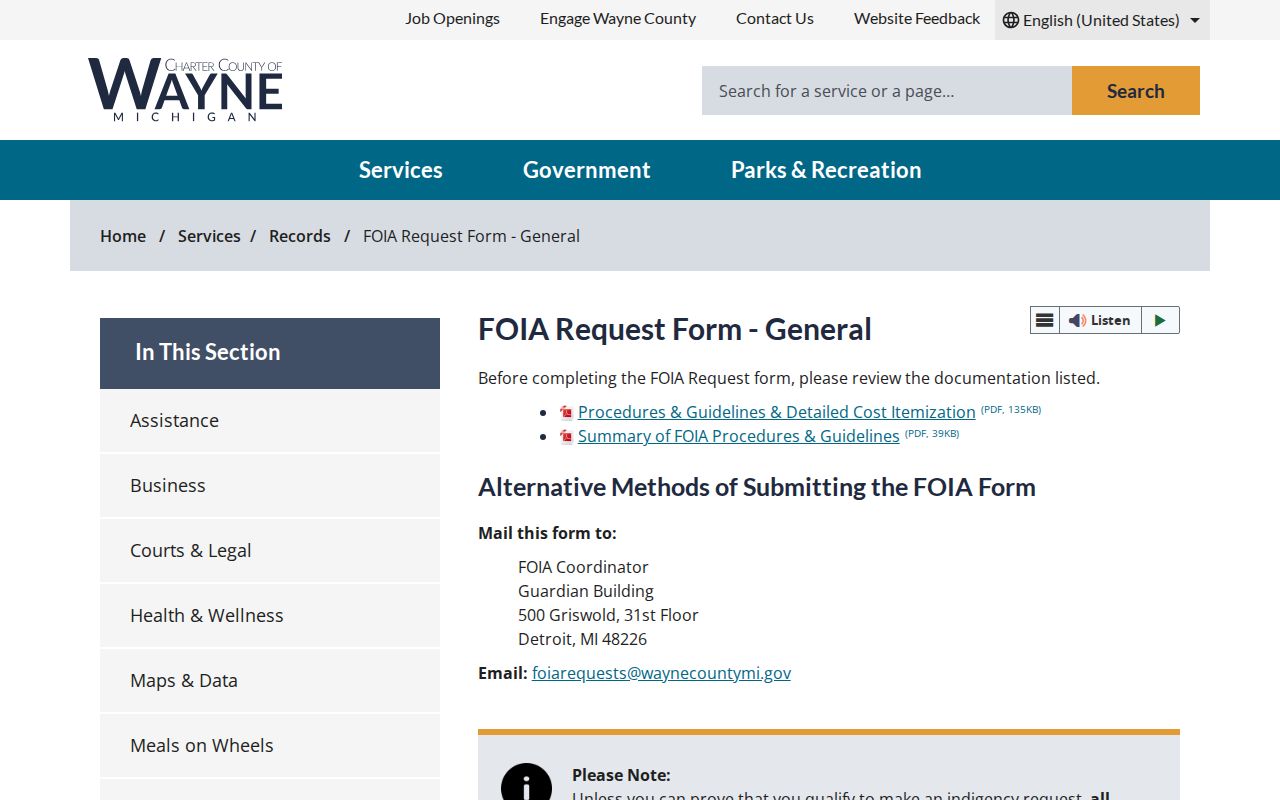
Michigan's Freedom of Information Act lets a city release its own records, and Wayne County runs a request portal for county records, but neither channel reaches a court file. The state's judiciary is not a public body under that law. The county request form still asks for a name, an address, and a specific record description.
Key Rules:
Michigan Freedom of Information Act, 1976 PA 442 reaches city and county agencies, with exemptions and fees.
MCL 764.1c sets the complaint and warrant process, so a warrant is not automatically posted online.
MCL 712A.18 limits access to juvenile matters, which do not flow through a city docket.